
 Support
  Support

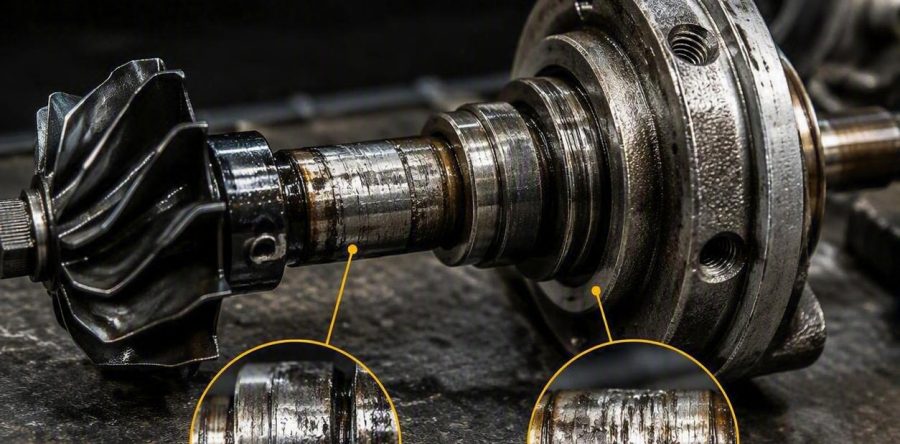
When a turbocharger fails, many vehicle owners immediately blame the turbo itself. However, one of the most common causes of premature turbocharger failure is a restricted turbo oil supply line. Because a turbocharger relies on a constant flow of clean engine oil for lubrication and cooling, even a partial blockage can quickly lead to severe damage.
If you're experiencing turbocharger problems or preparing for a turbo replacement, watch for these five signs that your turbo oil supply line may be restricted.
1. Excessive Turbo Whining or Screeching
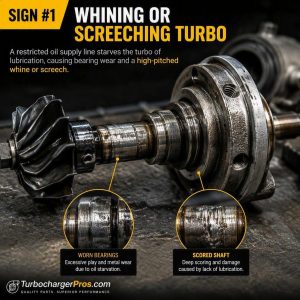
A healthy turbocharger produces a smooth, consistent sound during operation. If you hear a high-pitched whining, screeching, or siren-like noise, it could indicate that the turbo bearings are not receiving enough lubrication.
When oil flow is restricted, the turbo shaft and bearings experience increased friction. Over time, this metal-to-metal contact can cause permanent damage and eventually lead to turbo failure.
What to look for:
- Unusual whining noises during acceleration
- Increased turbo noise compared to normal operation
- Sounds becoming louder over time
2. Turbocharger Failure Shortly After Replacement
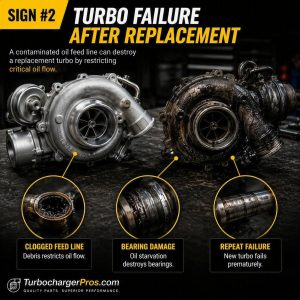
If a newly installed turbocharger fails within a short period of time, a restricted oil feed line could be the culprit.
Many turbochargers are replaced without changing the oil supply line. Unfortunately, contaminants such as sludge, carbon buildup, metal particles, or debris can remain trapped inside the line and restrict oil flow to the new turbo.
This is why many professional installers recommend replacing the oil feed line whenever a turbocharger is replaced.
Warning signs include:
- Repeated turbo failures
- Bearing damage in a relatively new turbo
- Manufacturer warranty claims denied due to oil contamination
- Image Suggestion
3. Blue Smoke From the Exhaust
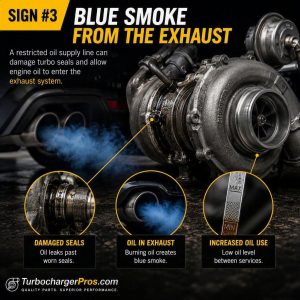
A restricted oil supply line can damage internal turbo bearings and seals. Once these seals begin to fail, engine oil may leak into the exhaust system.
The result is often noticeable blue smoke coming from the tailpipe, especially during acceleration or after idling.
Common symptoms:
-Blue smoke from the exhaust
-Increased oil consumption
-Oil residue in turbo piping or intercooler components
Ignoring this symptom can lead to more extensive engine and emissions system damage.
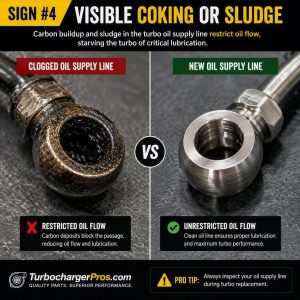
4. Visible Sludge or Contamination in the Oil Feed Line
One of the clearest indicators of a restricted oil supply line is visible contamination.
Over time, engine oil can leave behind carbon deposits and sludge, especially when oil change intervals are extended or poor-quality oil is used. These contaminants can accumulate inside the oil feed line and significantly reduce oil flow to the turbocharger.
When inspecting the line, look for:
-Carbon buildup
-Sludge deposits
-Metal particles
-Kinked or damaged sections of tubing
If contamination is present, replacing the line is often the safest and most cost-effective solution.
5. Loss of Power and Slow Boost Response
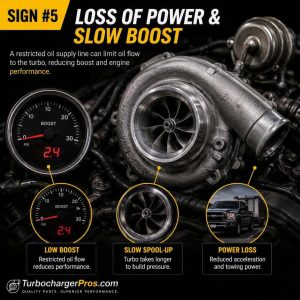
A turbocharger that is not properly lubricated cannot operate efficiently. As internal components wear, boost pressure may decrease, resulting in sluggish acceleration and reduced engine performance.
Drivers often notice:
-Delayed turbo spool-up
-Reduced engine power
-Poor towing performance
-Lower fuel efficiency
A restriction may begin as a minor issue but can rapidly progress into complete turbocharger failure if left unresolved.
Protect Your Investment
A turbocharger depends on a continuous supply of clean, unrestricted oil. Ignoring a restricted oil feed line can quickly lead to bearing damage, oil leaks, loss of power, and costly turbocharger failure.
If you're replacing a turbocharger, it's smart to inspect or replace the oil supply line at the same time. The small additional cost of a new oil feed line can help protect your turbo investment and prevent repeat repairs.
Need a replacement turbo oil feed line? Browse our vehicle-specific turbo oil supply lines and installation components to ensure your new turbo receives the clean oil flow it needs for long-term reliability. We have turbo kits that include the turbo lines as well, these kits come with an extra year of warranty in most cases.